The South Korean won (₩ / KRW) is the official currency of South Korea. One won is subdivided into smaller units, although coins and banknotes are used in everyday transactions. Credit and debit cards are widely accepted in Seoul, including at restaurants, department stores, and many shops. However, it is advisable to carry some cash for traditional markets, small businesses, and certain local vendors.
Conference venue:
The official conference venue will be announced soon. Further details will be posted on this page.
Conference venue:
Need Venue
Address: Need Venue
The conference organizer does not have any arrangements with hotels, however you can find a list of hotels close to the conference Venue on the Accommodation Section of the Conference website.
You can check the Accommodation Section of the Conference website or booking.com for further options.
To find accurate and real-time weather information, check a weather forecast website or app closer to the time of your visit
Taxi or Ride-Sharing
Taxis or ride-sharing services such as Grab or Gojek (commonly used in Singapore) can take you directly to the NTU @ One-North Executive Centre, located at 11 Slim Barracks Rise, Singapore 138664. This is a convenient and time-saving option, especially if you’re carrying luggage or traveling in a group. However, it is generally more expensive than public transport, particularly during peak hours or when surge pricing is in effect.
Train
The nearest train station to NTU @ One-North Executive Centre, located at 11 Slim Barracks Rise, Singapore 138664, is one-north MRT Station on the Circle Line. It’s just a 3-5 minute walk from the campus. If you’re coming from Buona Vista MRT Station, which connects both the Circle Line and East–West Line, it’s only one stop away, making the campus easily accessible from various parts of Singapore
Metro and Bus
You can also take the MRT to Buona Vista Station (served by both the East–West and Circle Lines) and transfer to the Circle Line heading toward one-north MRT Station, which is just a short walk from NTU @ One-North Executive Centre at 11 Slim Barracks Rise, Singapore 138664. Alternatively, several bus services—including 91, 92, 95, 191, 196, and 200—stop near the one-north area, providing convenient access to the campus from various parts of the city.
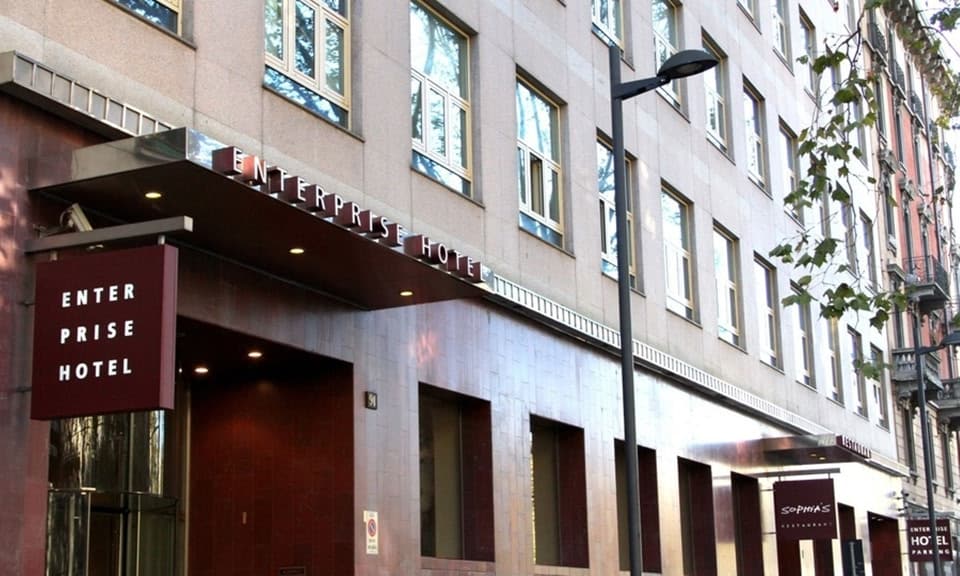
Accommodation Near the Conference Venue
Hotel VIU Milan
Address: Via Aristotile Fioravanti, 6, 20154 Milano MI, Italy
Phone: +39 02 8001 0910
Hotel Mozart
Address: Piazza Gerusalemme, 6, 20154 Milano MI, Italy
Phone: +39 02 3310 4215
Ibis Milano Centro
Address: Via Camillo Finocchiaro Aprile, 2, 20124 Milano MI, Italy
Phone: +39 02 63151
Hotel Siena
Address: Via Panfilo Castaldi, 17, 20124 Milano MI, Italy
Phone: +39 02 2951 6108
Seoul Required Information
South Korea uses plug types C and F, which have two round pins. The country operates on a 220V supply voltage and 60Hz frequency. Travelers from countries with different plug types may need a travel adapter. Check that your electronic devices support 220V and 60Hz before connecting them; a voltage converter may be necessary for incompatible devices.
Seoul Station is one of the city's principal railway hubs, offering connections to destinations throughout South Korea. It serves high-speed KTX trains and other rail services to major cities, including Busan, Daejeon, and Daegu. Seoul also has an extensive urban railway network connecting its central districts, residential areas, shopping districts, and major attractions.
Other important stations include Yongsan Station, which serves selected long-distance routes, and Suseo Station, which is a major departure point for SRT high-speed trains.
Seoul has an extensive and efficient public transportation system, making it easy to explore the city without a car.
The city's public transport network includes:
- Subway: An extensive network connecting major attractions, business districts, and residential areas.
- City Buses: Local and express services operating throughout the city.
- Night Buses: Selected routes serving passengers during late-night hours.
- Regional and High-Speed Trains: Connections to other cities throughout South Korea.
- Airport Rail Services: Connections between Incheon International Airport and Seoul, including the AREX train.
A T-money transportation card is a convenient option for paying subway and bus fares. It can generally be topped up at participating convenience stores and subway stations. Travelers should check current payment options, as acceptance of international contactless bank cards may vary by service.
Walking is also a practical way to explore many neighborhoods, particularly areas such as Myeongdong, Insadong, and Hongdae.
Travelers may generally bring reasonable quantities of medicine into South Korea for personal use. However, certain medications, including some prescription painkillers, ADHD medications, and medicines containing controlled substances, may require prior approval from the relevant South Korean authorities.
To avoid delays or problems at customs:
- Carry medicines in their original packaging.
- Bring a copy of your prescription and, where appropriate, a doctor's letter in English.
- Check whether your medication requires advance authorization before traveling.
- Keep medicines in your carry-on luggage where practical.
- Confirm the import rules for controlled medicines with South Korean authorities before departure.
Requirements vary depending on the medication and its ingredients, so do not assume that a prescription issued in your home country automatically permits import into South Korea.
For further information, visit: UK Government – South Korea Travel Advice: Health and Medication.
Seoul is primarily served by two international airports:
• Incheon International Airport (ICN)
Incheon International Airport is South Korea's main international aviation hub, located west of Seoul. It handles flights to destinations throughout Asia, Europe, North America, and other regions. Travelers can reach central Seoul using the Airport Railroad Express (AREX), airport limousine buses, taxis, and other transport services.
The AREX express train takes approximately 43 minutes to Seoul Station from Terminal 1 and 51 minutes from Terminal 2. The all-stop train takes approximately 59–66 minutes, depending on the terminal.
• Gimpo International Airport (GMP)
Gimpo International Airport is closer to central Seoul and primarily serves domestic flights, along with selected international routes, particularly within East Asia. It is connected to Seoul's subway system and the airport railway, making it convenient for reaching different parts of the city.
Travelers should check their flight details carefully to confirm which airport they will use.
Getting around Seoul is convenient thanks to its variety of transportation options:
- Taxi services are widely available throughout the city, with standard, deluxe, large, and international taxi options.
- Kakao T and k.ride are popular taxi-booking applications. The k.ride app offers English-language support and accepts international credit cards, subject to payment eligibility.
- Uber Taxi is also available in South Korea and can be a convenient option for international visitors.
- Public bicycle rental: Seoul's Ttareungi bike-sharing service allows visitors to rent and return bicycles at designated docking stations.
- Airport limousine buses provide connections between the airports, hotels, and various districts of Seoul.
- Hangang River Bus: This river transport service offers a different way to travel along the Han River, with routes and schedules subject to change.
For more information, visit the Official Seoul Tourism Transportation Guide.
South Korea has different visa and entry requirements depending on the traveler's nationality, passport type, and purpose of visit. Some travelers may enter visa-free for short stays, while others must obtain a South Korean visa before traveling.
Eligible visa-exempt travelers may also need a Korea Electronic Travel Authorization (K-ETA) before boarding their flight or ship. However, certain nationalities are temporarily exempt from the K-ETA requirement through 31 December 2026. Requirements should be checked before departure because exemptions and entry policies may change.
Visitors should ensure they have the appropriate documents, which may include:
- A valid passport.
- A visa or approved K-ETA, if required.
- Proof of accommodation and travel itinerary, if requested.
- Evidence of sufficient funds, if requested.
- A return or onward travel ticket, if required.
For the latest visa requirements and application procedures, visit:
Travel tip: Entry requirements depend on your nationality, not simply your country of residence. Always confirm the rules applicable to your passport before booking or traveling.
